

The Resilient Woman: More Than What She Carries
At The Healing Studio (Ọgwụ), our blog is a space for reflection, empowerment, and transformation.
Here, we explore the real-life challenges and triumphs of Black and Brown professionals navigating systems not built for us.
Whether you are struggling with career progression, unpacking imposter syndrome, leading with cultural humility, or advocating for true inclusion, our blog offers you:
Thought-provoking articles
Empowering poetry
Leadership insights
Personal reflections and Healing
Practical tips for career and leadership growth
2 Jul 2026 11:18
2 Jul 2026 11:18
2 Jul 2026 11:18
2 Jul 2026 11:18
That strength lives inside you.
The brave one.
The becoming one.
The one who knows more than systems ever gave them credit for.
Yet too often, that part of you is quietened by subtle, learned lies,
the ones that whisper:
You’re not ready.
You don’t belong here.
You’re taking up too much space.
One of the most dangerous of those lies is called imposter syndrome
the hidden thief of confidence,
the internal echo of external systems that have long questioned the presence, competence, and authority of Black and Brown people.
Imposter syndrome is often framed as a personal flaw.
A mindset problem.
Something to “fix” within the individual.
But this framing is incomplete and deeply unfair.
For Black and Brown people, imposter syndrome is not born in isolation.
It is cultivated in systems shaped by colonial histories, white supremacy, and racial hierarchies, systems that were never designed for our safety, belonging, or flourishing.
It grows in classrooms where our knowledge is marginalised.
In workplaces where we are over-scrutinised and under-affirmed.
In leadership spaces where we are welcomed as symbols of diversity but resisted as voices of authority.
In these spaces, self-doubt is not weakness.
It is a rational response to structural exclusion.
And still,
Every leader you admire has heard that voice.
Every visionary.
Every person who dared to exist beyond the limits imposed on them.
The difference is not that they never doubted themselves.
It is that, at some point, they learned to name the lie and talk back to it.
So today, remember this:
You are not behind.
You are not underqualified.
You are not an imposter in your own life or leadership.
You are here because you belong.
You are learning because growth is not linear.
You are becoming, not in spite of your history, but because of it.
Decolonisation is not just about institutions.
It is also about reclaiming the self.
It is the work of unlearning narratives that told us we were less,
and remembering that our presence, knowledge, and leadership have always been valid.
You are not here by accident.
You are here with purpose.
And that is more than enough.
With gentleness, resistance, and solidarity,
Victory...
© Oforji, 2026

There are rooms many Black and Brown people enter with hope,
institutions, professions, opportunities that promise abundance, growth, and belonging.
From the outside, these rooms look full.
Prestigious.
Well-resourced.
Welcoming.
But inside, the experience can feel very different.
This poem speaks to that tension, the dissonance between appearance and reality, between visibility and voice, between being present and being held.
It is a reflection on isolation within systems that were never designed with our full humanity in mind.
I went from a room of plenty
to a room of expecting.
I entered with hope,
with expectation,
with faith.
Some fears,
but fears not big enough.
At first, the room felt cold.
Empty.
But as time went on,
the depths grew deeper,
the void stretched wider,
and the cold became colder.
No one to talk to.
No one to tell.
Everything around me seemed fine.
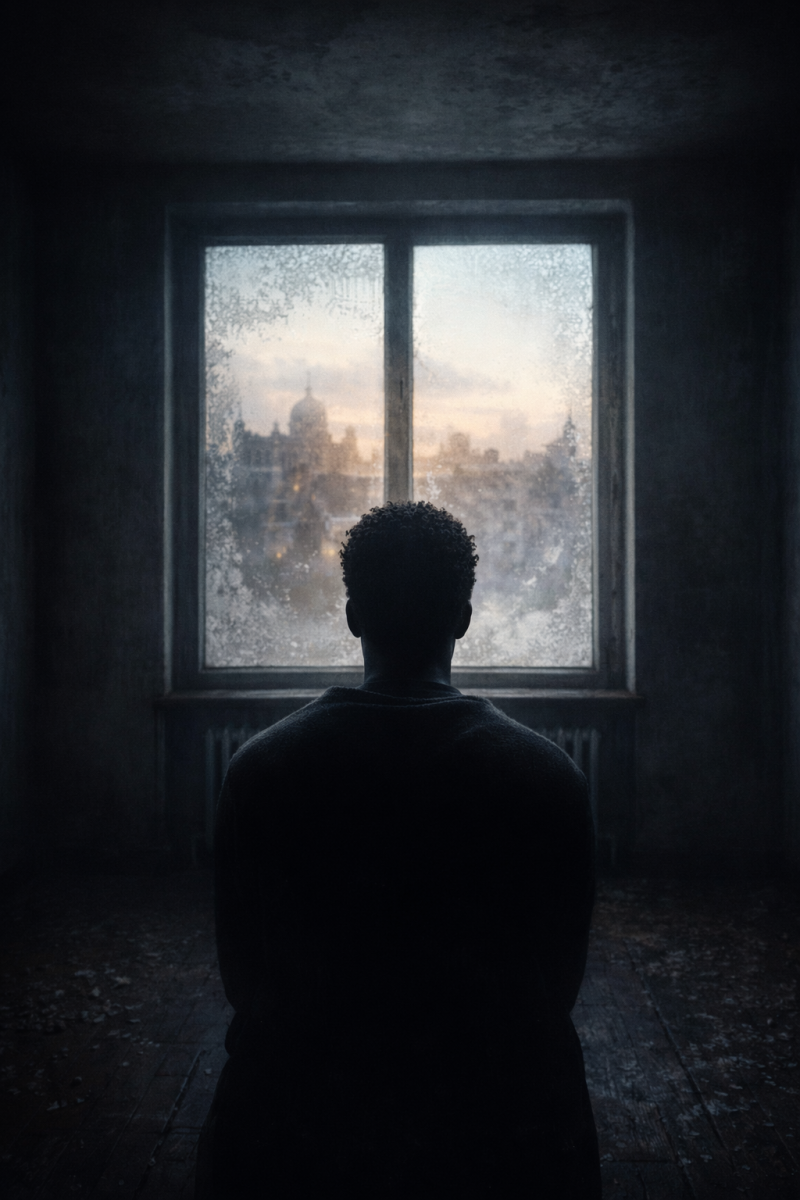
I looked through the window of this room,
peeping through the glass.
From outside, the window looked beautiful,
perfect, even.
But from inside,
it was just as cold,
perhaps colder than it could ever be.
No one to talk to.
No one to tell.
I mean,
you come from plenty,
why ask for many?
I drowned in my agony.
Seconds became minutes,
minutes became hours,
hours became days,
days became months
and I mean months,
counted down into years.
My faith started to decline.
Hope began to fade.
I opened my mouth,
and I could not find my praise.
My voice froze.
It fell out of rhythm,
out of reading.
I could not call for help,
because my room looked beautiful from outside.
Yet the prettier it seemed,
the wider it became.
When my prayers were over,
the people around me called for mercy.
My story is not complete.
I choose to pause here,
for this poem
is a continued journey.
From your friend,
Victory
© Oforji, 2026
For Black and Brown people, silence is often misunderstood.
We are told:
You’re doing well.
You should be grateful.
Others have it worse.
But what is invisible is the emotional labour of surviving in spaces where:
Support is conditional
Belonging is performative
Pain must be hidden to be taken seriously
The room looks beautiful from the outside, so our suffering is dismissed.
This is not individual failure.
It is structural neglect.
Decolonisation asks us to tell the truth about rooms like this.
It asks us to name:
How isolation is produced, not accidental
How silence is enforced through respectability
How beauty, prestige, and success can coexist with harm
And it reminds us that pausing is not quitting.
Naming is not weakness.
Telling our stories is an act of resistance.
This poem pauses where many journeys do—not because the story ends, but because survival sometimes requires rest.
If you have ever sat in a room that looked perfect from the outside
but felt unbearably cold within,
know this:
You are not ungrateful.
You are not asking for too much.
You are responding to something real.
Your story is not over.
And you do not have to carry it alone.
In this space, we share inspiration, tips, and stories that help you get the most out of our services. Whether you're looking for helpful tips, background information, or a behind-the-scenes look: you'll find it all here. We regularly post new articles, so keep an eye on the blog for updates and new insights.

Get our latest posts, free resources, and leadership tips delivered straight to your inbox.